Tight Junctions
Tight junctions are responsible for creating and maintaining biological compartments in mammals. Claudins are one of the major components of tight junctions (TJs) that polymerize within the cell membrane and form interactions between cells. TJ morphology and barrier function is tissue specific and regulated by claudin subtypes. Claudin strands are known to be dynamic and reshape within TJs to accommodate large-scale movements and rearrangements of epithelial tissues. The architecture of TJs presents as meshwork strands capable of arching and branching, which wrap around epithelial cells like a belt.
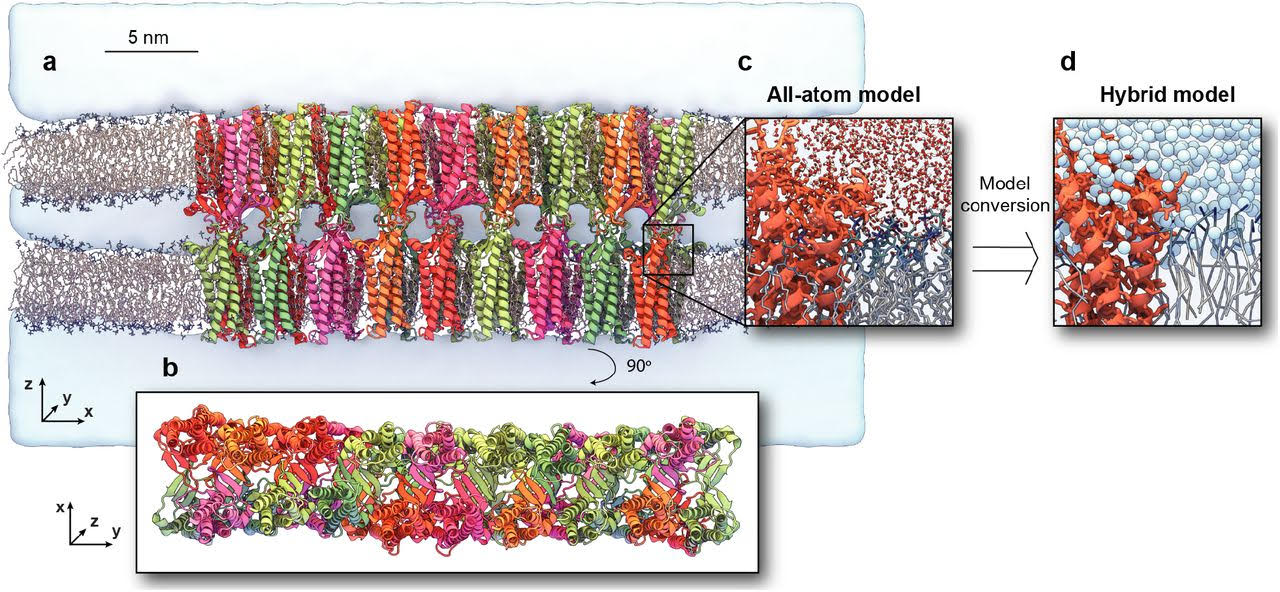
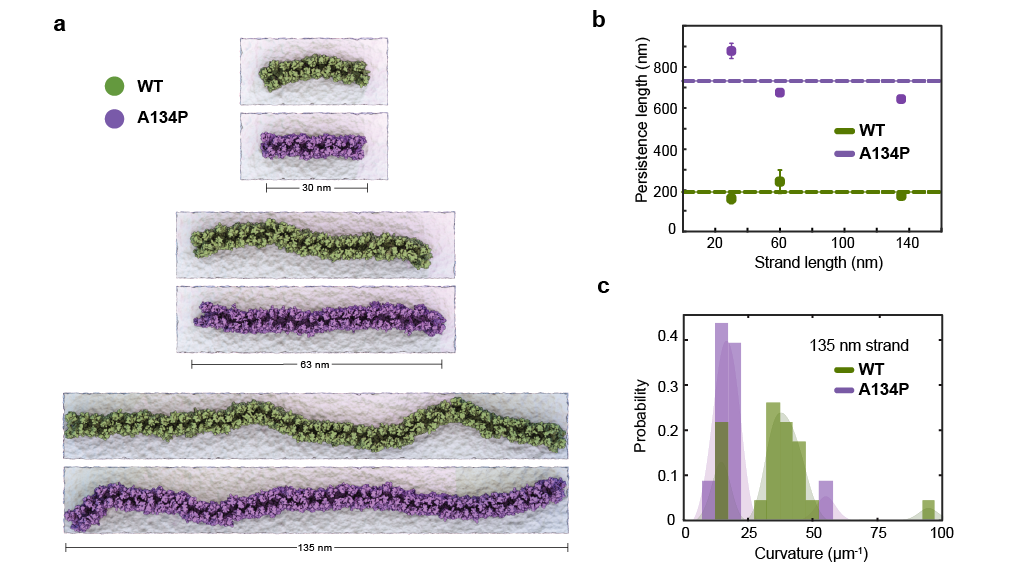
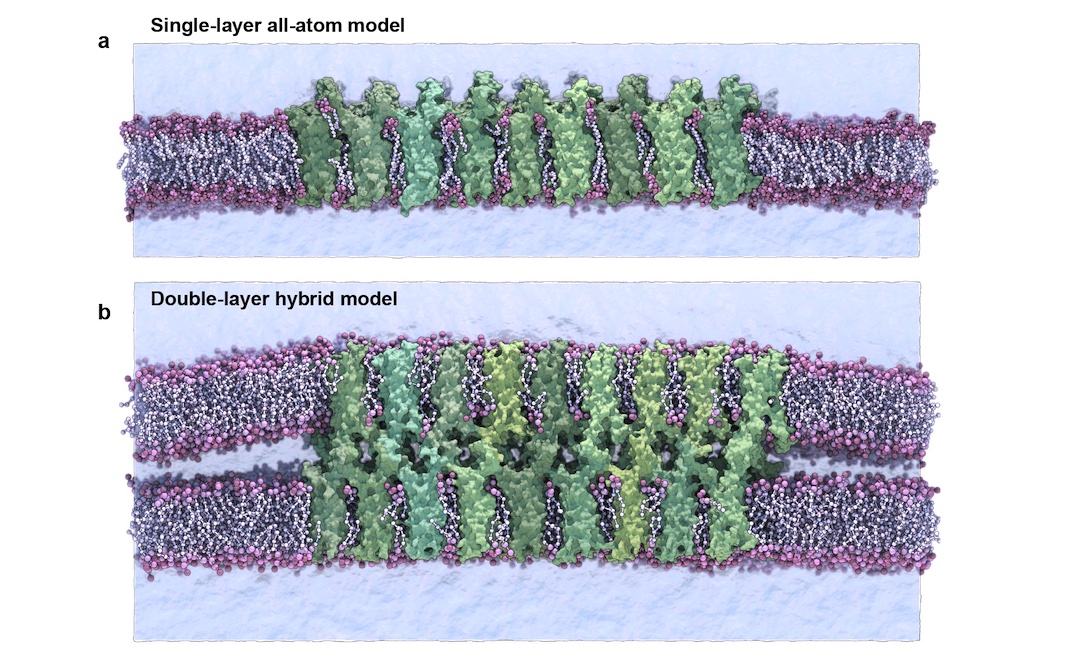
We have used multiscale modeling and hybrid resolution Molecular Dynamics (MD) simulations of WT and mutant claudin-15 strands, which reflect biophysical strand properties such as curvature and persistence length.
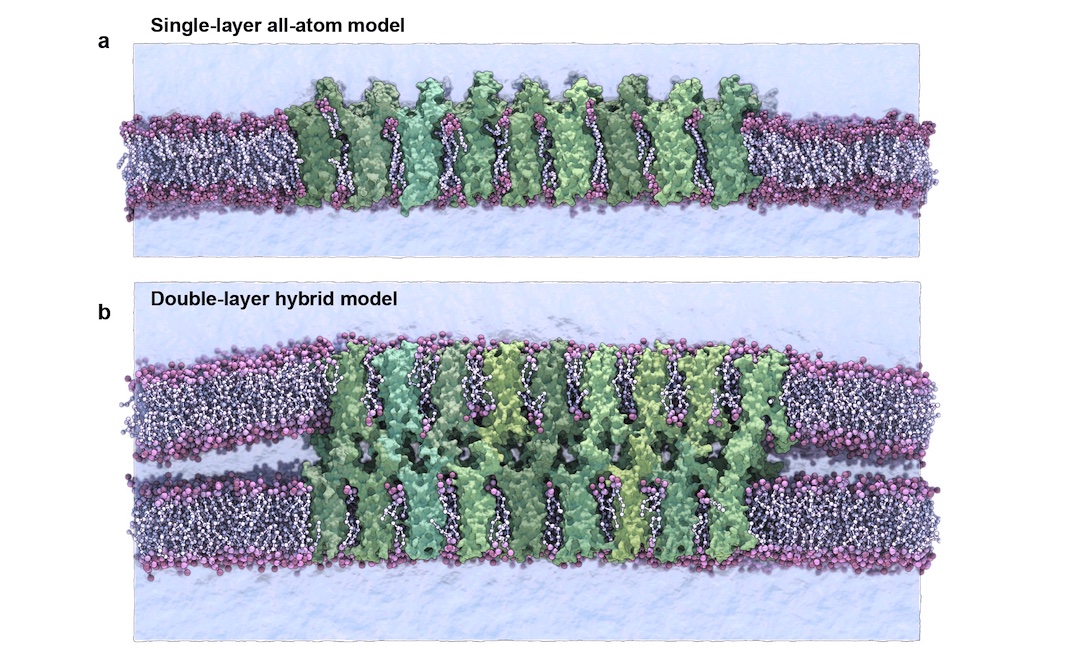
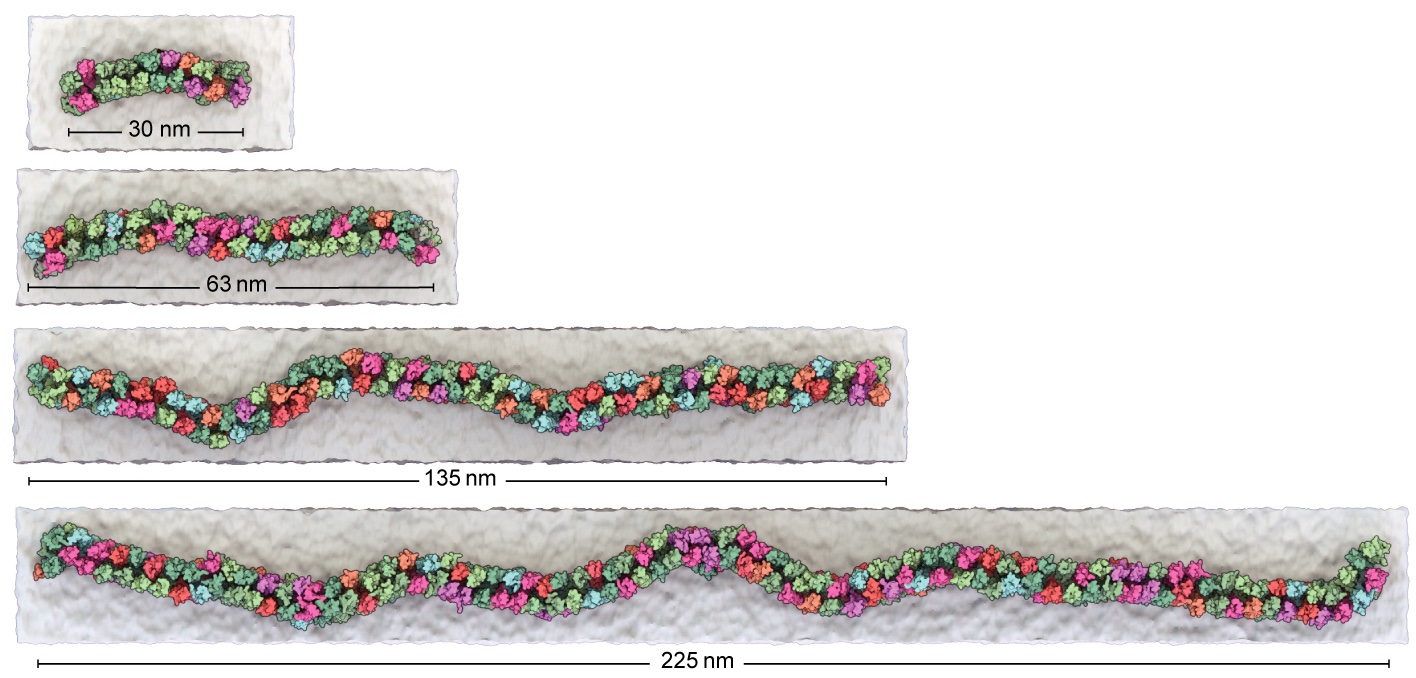
These computationally modelled strands of up to 225 nm in length in two parallel lipid membranes demonstrate their mechanical properties at microsecond timescales.
We also demonstrate that a single residue mutation (A134P) significantly reduces strand curvature and flexibility.